Chains
An experimental short film combining motion capture, custom rigging, and particle-driven VFX. My responsibilities spanned the full technical pipeline — from cleaning mocap data in Maya to building fracture effects in Blender and writing a custom plugin to give the art team direct control over the simulation.
Motion Capture Refinement
The raw performance data captured in the studio contained joint inversion, foot sliding and interpenetration artefacts that made it unusable on a custom character rig without significant cleanup. I re-directed the bone mapping in Maya and cleaned up the sequence frames.
The result was a clean animation that faithfully reproduced the original performance on a character.
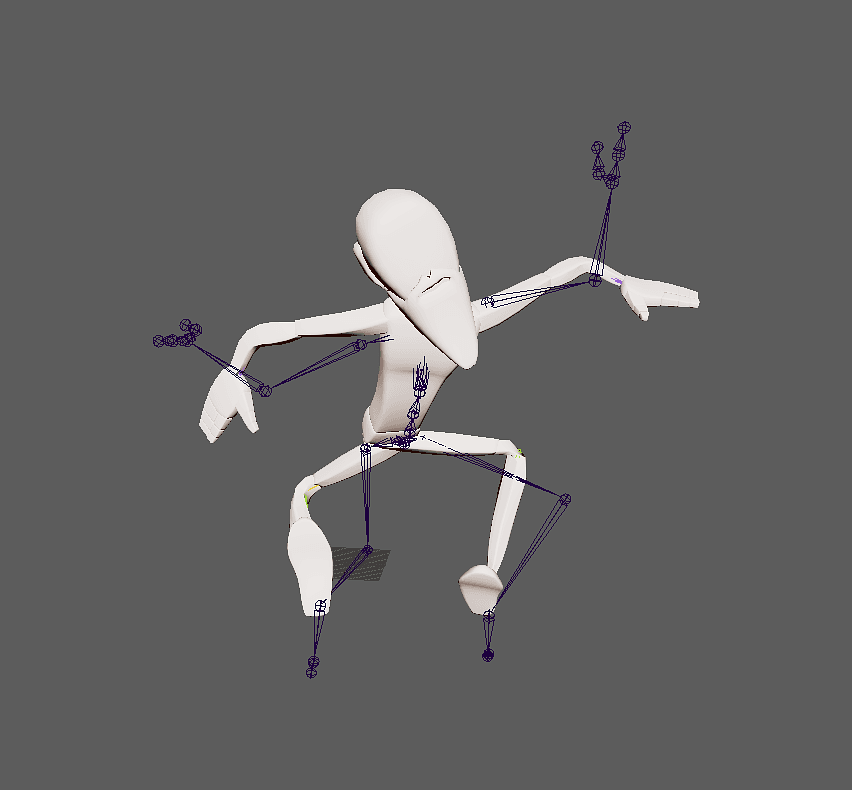
Raw mocap data — before cleanup
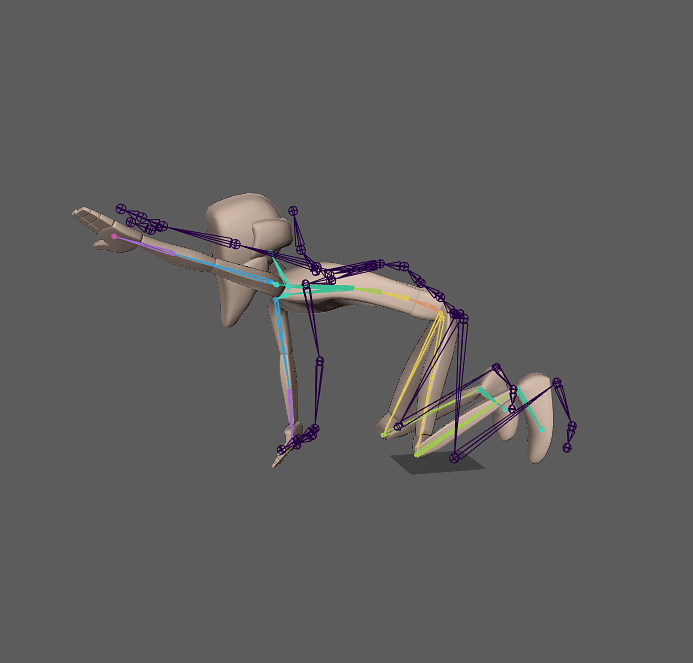
After Maya refinement
VFX — Fracture & Destruction
The fracture and destruction sequences were built entirely in Blender using its built-in rigid body simulation. The workflow had real limitations at this scale: simulations could not be partially baked or checkpointed, so a crash during a long bake wiped all progress. Render times also scaled poorly with scene complexity, and there was no straightforward way to parallelise or hand off individual passes.
Working around this meant strict incremental versioning and keeping each scene file as lean as possible. The instability encountered here was a direct catalyst for the pipeline rethink in Topological Breach — where the same class of effect moved to Houdini with a fully procedural geometry nodes setup, cutting simulation and render time by 90%.
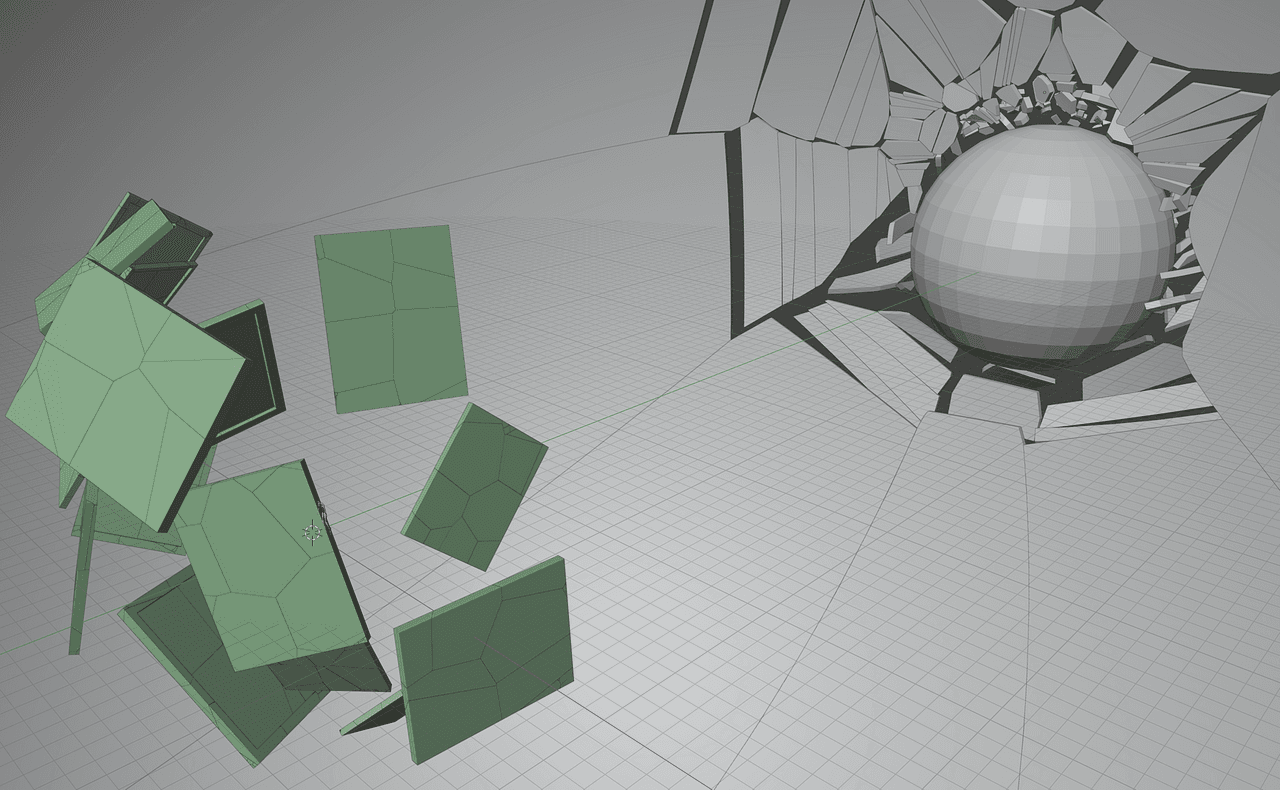
Blender fracture setup
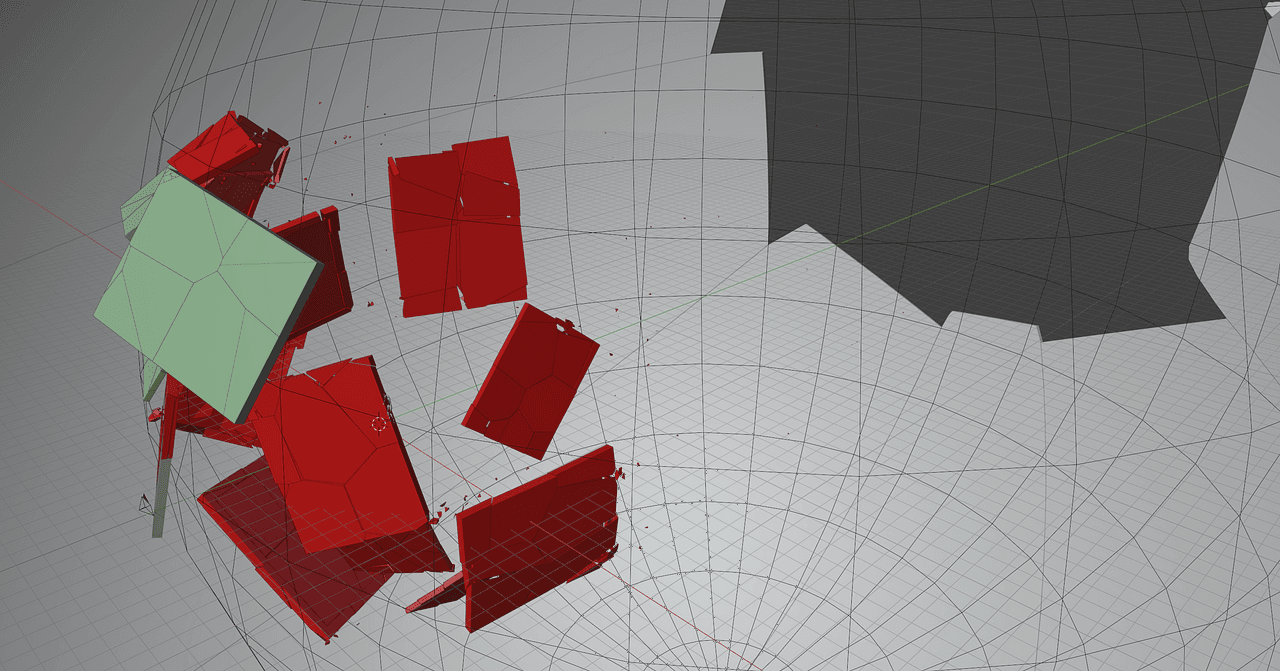
Rigid body simulation — behind the scene
Flow Control Plugin
In order to enable the art team to adjust the meteorite flow without repeatedly conducting simulations, I developed a custom Blender Python plugin that presents the key simulation parameters (such as particle density, speed, scattering angle, generation timing, and emission shape) in a dedicated panel interface. This way, the team can adjust any aspect of the sequence in real time without needing to understand the underlying logic.
The plugin also handles scene-state bookmarking so multiple versions of a parameter set can be saved and compared within a single session — something Blender's native undo stack does not support across different simulation bakes.
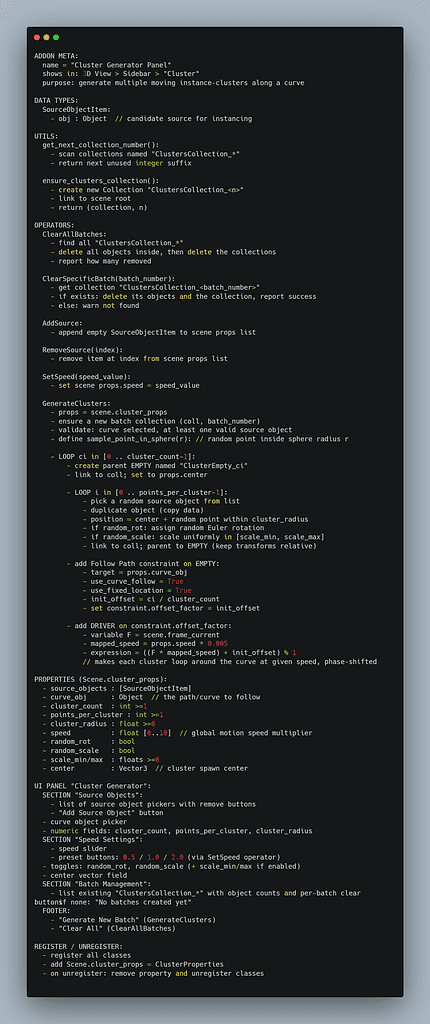
Plugin panel — parameter controls for the art team